Houston Rockets vs Lakers Match Player Stats: A Deep Dive into the Game’s Defining Numbers
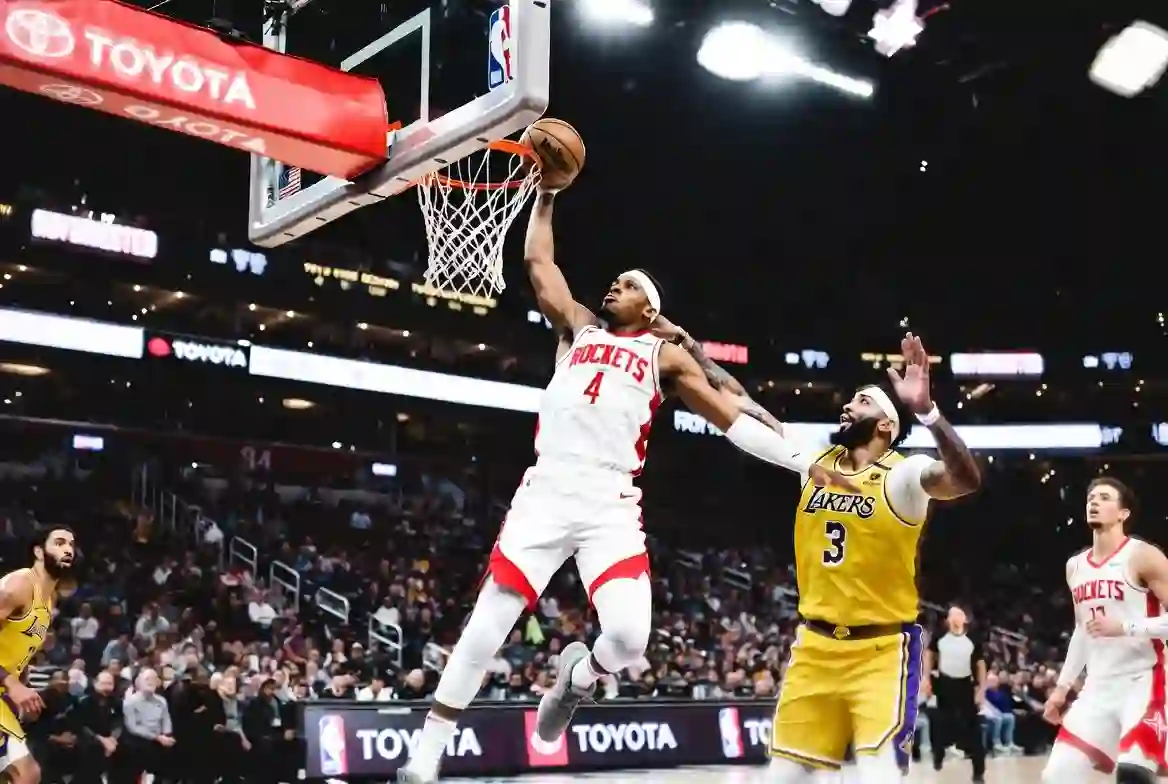
The final Houston Rockets vs Lakers Match Player Stats sounded on a contest that promised fireworks, and the box score delivered a narrative richer than any pre-game script. The Houston Rockets outlasted the Los Angeles Lakers in a 128-118 thriller at Toyota Center, leveraging a torrent of three-pointers and transition speed to overcome a brilliant individual performance. With an announced attendance of 18,055 witnessing every momentum swing, the Rockets flipped a halftime deficit into a double-digit victory by dominating the possession battle and converting defense into instant offense.
The game was a classic clash of styles: the Rockets’ high-volume perimeter attack versus the Lakers’ desire to control the paint. While the Lakers found early success inside, Houston’s defensive adjustments in the second half, particularly forcing live-ball turnovers, starved the visitors of quality looks. Ultimately, the Rockets’ depth proved to be the unravelling force, with six players scoring in double figures, turning a tense fourth-quarter lead into a comfortable statement win.
Match Overview
| Information | Match Details |
|---|---|
| Event | NBA Regular Season |
| Game | Houston Rockets vs Los Angeles Lakers |
| Date | January 29, 2024 |
| Venue | Toyota Center, Houston, TX |
| Attendance | 18,055 |
| Winner | Houston Rockets |
| Final Score | 128-118 |
| Broadcast | Space City Home Network, Spectrum SportsNet |
Core Match Statistics Overview
The raw team numbers expose the glaring gap in pace and perimeter execution that decided the contest. Houston’s willingness to push the ball off missed shots resulted in a massive 22-5 advantage in fast-break points, a stat that left the Lakers’ transition defense in tatters.
| Team Statistic | Houston Rockets | Los Angeles Lakers |
|---|---|---|
| Field Goal % | 47.3% (44/93) | 45.1% (41/91) |
| 3-Point % | 38.3% (18/47) | 30.8% (8/26) |
| Free Throw % | 75.9% (22/29) | 77.8% (28/36) |
| Total Rebounds | 45 | 47 |
| Assists | 28 | 22 |
| Turnovers | 11 | 16 |
| Steals | 11 | 6 |
| Blocks | 5 | 6 |
The Three-Point Volume Differential
The discrepancy beyond the arc wasn’t just about accuracy; it was about sheer mathematical volume that buried the Lakers before they could adjust.
- The Rockets attempted 47 triples, connecting on 18, creating a staggering 30-point differential from deep compared to the Lakers’ 8 makes on 26 attempts.
- Houston’s guards consistently collapsed the defense with dribble penetration, kicking out to open shooters, while the Lakers’ offense often devolved into static isolation sets with poor spacing.
Points Off Turnovers
Houston’s defensive activity turned mistakes into a track meet, generating a chasm in points off giveaways that the Lakers couldn’t bridge.
- The Rockets scored 24 points off 16 Lakers turnovers, a lethal conversion rate that fueled their second-half surge.
- Jalen Green and Fred VanVleet excelled at reading passing lanes, with their deflections leading directly to run-out dunks that ignited the home crowd.
Period-by-Period Analysis
1st Quarter: Lakers 35, Rockets 30
| Team | Score |
|---|---|
| Rockets | 30 |
| Lakers | 35 |
- The Lakers established a dominant interior presence early, with Anthony Davis scoring 12 first-quarter points on a series of lobs and putbacks.
- Houston’s defensive rotations were a step slow, allowing D’Angelo Russell to orchestrate a clean pick-and-roll game with minimal resistance.
- The Rockets stayed afloat by hitting 5 of 12 three-pointers, preventing the Lakers from stretching the lead to double digits despite the defensive struggles.
2nd Quarter: Rockets 32, Lakers 30
| Team | Score |
|---|---|
| Rockets | 32 |
| Lakers | 30 |
- Rookie Cam Whitmore provided a massive spark off the bench for Houston, attacking the rim with brute force and drawing fouls to swing the energy.
- The Lakers’ bench unit failed to contain dribble penetration, allowing the Rockets to stabilize the tempo and trim the deficit heading into halftime.
- Despite LeBron James facilitating at an elite level, the Lakers’ perimeter defense began to crack, surrendering two late corner threes.
3rd Quarter: Rockets 38, Lakers 30
| Team | Score |
|---|---|
| Rockets | 38 |
| Lakers | 30 |
- This was the decisive period where Houston’s Houston Rockets vs Lakers Match Player Stats jumped off the page defensively, turning 5 Lakers turnovers into 10 points.
- Jalen Green erupted for 14 points in the quarter, attacking the rim with renewed aggression against Austin Reaves.
- The Lakers’ offense stagnated, managing only 30 points as their shooters went cold from deep (1/7 3PT), forcing Davis into tough, contested mid-range shots.
4th Quarter: Rockets 28, Lakers 23
| Team | Score |
|---|---|
| Rockets | 28 |
| Lakers | 23 |
- Fred VanVleet took control of the game’s tempo, draining a critical step-back three and managing the shot clock brilliantly to silence a potential Lakers comeback.
- Alperen Sengun sealed the win with a series of high-post handoffs and a crucial offensive rebound that led to a corner three by Dillon Brooks.
- The Lakers looked fatigued, settling for low-efficiency isolation jumpers and failing to get stops on four consecutive possessions in the final three minutes.
Detailed Team Player Statistics
Houston Rockets Player Statistics
Jalen Green
- Points: 34 | Rebounds: 5 | Assists: 4 | Steals: 2
- Jalen Green was the catalyst for Houston’s explosive third quarter, showcasing a blend of hesitation moves and explosive finishing at the rim. His ability to draw fouls on drives opened up the perimeter for his teammates.
Alperen Sengun
- Points: 20 | Rebounds: 12 | Assists: 7 | Blocks: 2
- Sengun operated as a point-center, dismantling the Lakers’ drop coverage with his passing out of the post. Defensively, he held his ground against Davis in isolation situations during the second half.
Fred VanVleet
- Points: 16 | Rebounds: 3 | Assists: 8 | Steals: 3
- VanVleet was a defensive pest, hounding Lakers ball-handlers for 94 feet. His veteran calmness in the fourth quarter ensured the Rockets never lost control of the pace.
Cam Whitmore (Bench)
- Points: 18 | Rebounds: 6 | Assists: 1 | Steals: 1
- Whitmore provided relentless energy and rim pressure, punishing smaller defenders on switches. His efficient scoring off the pine was the bridge that kept Houston competitive when starters rested.
Los Angeles Lakers Player Statistics
Anthony Davis
- Points: 33 | Rebounds: 14 | Assists: 5 | Blocks: 4
- Davis was a two-way force, dominating the paint in the first half with put-back dunks and altering shots defensively. However, his offensive touches dried up in the second half as Houston sent hard double-teams.
LeBron James
- Points: 22 | Rebounds: 9 | Assists: 10 | Steals: 1
- LeBron nearly tallied a triple-double, controlling the game’s rhythm in the first half. However, his 5 turnovers, often resulting from forced cross-court passes, led to critical run-outs for Houston.
D’Angelo Russell
- Points: 14 | Assists: 7 | Rebounds: 2 | Turnovers: 3
- Russell started the game orchestrating the offense smoothly but disappeared during the Rockets’ third-quarter run. His defensive liability on switches was repeatedly exploited by Jalen Green.
Austin Reaves
- Points: 12 | Rebounds: 3 | Assists: 2 | 3-PT: 1/5
- Reaves struggled mightily with his outside shot, failing to provide the secondary spacing LeBron needs to operate. Houston defenders sagged off him, clogging the lane for Davis.
Statistical Leaders Summary
| Category | Houston Rockets | Los Angeles Lakers |
|---|---|---|
| Leading Scorer | Jalen Green (34) | Anthony Davis (33) |
| Second Leading Scorer | Alperen Sengun (20) | LeBron James (22) |
| Top Rebounder/Defense | Alperen Sengun (12 REB, 2 BLK) | Anthony Davis (14 REB, 4 BLK) |
| Most Assists/Playmaker | Fred VanVleet (8 AST) | LeBron James (10 AST) |
Analytical Breakdowns
Why the Houston Rockets Won
Fast-Break Execution
The Rockets turned defensive rebounds into immediate offense, bypassing the Lakers’ set defense entirely.
| Stat | Rockets | Lakers |
|---|---|---|
| Fast Break Points | 22 | 5 |
| Points Off Turnovers | 24 | 12 |
Superior Rotation Depth
The bench production was a mismatch. Houston’s reserves outscored the Lakers’ bench by a significant margin, providing a relentless energy that the Lakers’ starters couldn’t match physically over 48 minutes.
Defensive Turnovers in the Second Half
By switching pick-and-rolls late in the shot clock, Houston forced the Lakers into rushed decisions. Generating 11 steals to the Lakers’ 6 created extra possessions that widened the scoring gap.
Why the Los Angeles Lakers Lost
Perimeter Defensive Collapse
The Lakers’ inability to fight over screens forced rotations that left Houston’s shooters wide open. Allowing 18 made three-pointers mathematically makes it nearly impossible to win on the road, regardless of paint scoring efficiency.
Heavy Dependence on Two Players
The Lakers’ offense stalled when the ball left the hands of James or Davis. The supporting cast failed to create their own shots, leading to multiple shot-clock violations and late-clock heaves in the third quarter.
Historical Context & Advanced Insights
Season Series Breakdown
This game evened the regular-season series, highlighting the extreme home-court advantage in this matchup.
| Date | Venue | Result | Top Performer |
|---|---|---|---|
| Dec 2, 2023 | Crypto.com Arena | Lakers 107, Rockets 97 | Anthony Davis (27 PTS, 14 REB) |
| Jan 29, 2024 | Toyota Center | Rockets 128, Lakers 118 | Jalen Green (34 PTS, 5 REB) |
Advanced Statistical Insights
The assist-to-field-goal ratio was a clear predictor of success in this contest. The Rockets registered assists on 63.6% of their made field goals (28 assists on 44 buckets), indicating a free-flowing, democratic offense. Conversely, the Lakers stagnated at 53.6% (22 assists on 41 buckets). This disparity underscores how isolation-heavy play doomed the Lakers once Houston’s defense tightened the paint; the ball movement simply wasn’t sharp enough to break the defense down.
Game Implications & Key Lessons
What This Means for the Rockets
- This victory solidifies their standing in the Play-In tournament race, proving they can beat a top-tier opponent through disciplined execution rather than just athleticism.
- The chemistry between Green and Sengun continues to evolve into a lethal two-man game, giving the Rockets a consistent half-court engine.
What This Means for the Lakers
- The front office must recognize the desperate need for a two-way wing defender; asking Reaves and Russell to consistently guard explosive guards is a losing formula.
- Defensive transition drills should be a priority in practice—the 22-5 fast-break disparity indicates a fundamental breakdown in getting back.
Key Lessons
- Live-ball turnovers create the highest percentage scoring chances in basketball.
- Volume three-point shooting is the ultimate equalizer, even against elite interior defense.
- Depth scoring is critical in back-to-back scenarios; starting units cannot always carry the load.
- Double-teaming a star player like Davis works only if perimeter rotations are crisp.
- Controlling the defensive glass fuels an unstoppable transition offense.
- The assist-to-turnover ratio of a point guard directly predicts team offensive rhythm.
Frequently Asked Questions
Who won the Houston Rockets vs Lakers game?
The Houston Rockets defeated the Los Angeles Lakers with a final score of 128-118.
What were Jalen Green’s stats in the Rockets vs Lakers match?
Jalen Green led all scorers with 34 points, along with 5 rebounds and 4 assists, dominating the third quarter to fuel the Rockets’ win.
How did Anthony Davis perform against the Rockets?
Anthony Davis recorded a double-double with 33 points and 14 rebounds, but his offensive production dropped significantly in the second half due to Houston’s aggressive double-teams.
What was the key statistical difference in the Rockets vs Lakers game?
The biggest gap was three-point shooting. Houston made 18 three-pointers compared to the Lakers’ 8, creating a 30-point differential from beyond the arc.
Did LeBron James get a triple-double?
LeBron James fell just short of a triple-double, finishing with 22 points, 10 assists, and 9 rebounds. His 5 turnovers, however, proved costly.
How many points did the Rockets score off turnovers?
The Rockets scored 24 points off 16 Lakers turnovers, a decisive factor that ignited their fast-break offense.
The Houston Rockets vs Lakers Match Player Stats tell a definitive story of complementary basketball triumphing over top-heavy talent. While Anthony Davis was nearly unstoppable around the basket, the Rockets’ systematic approach—flooding the perimeter, winning the turnover battle, and spreading scoring responsibilities—proved mathematically superior.
The Lakers’ defensive issues against quick guards and volume shooters continue to plague them, but for Houston, this tape represents a blueprint for sustainable winning. By combining defensive physicality with selfless shooting, the Rockets exposed the floor-ceiling gap that separates true playoff contenders from a one-man show.